
Installing Solar Water Heaters: UK Homeowner’s Complete Guide
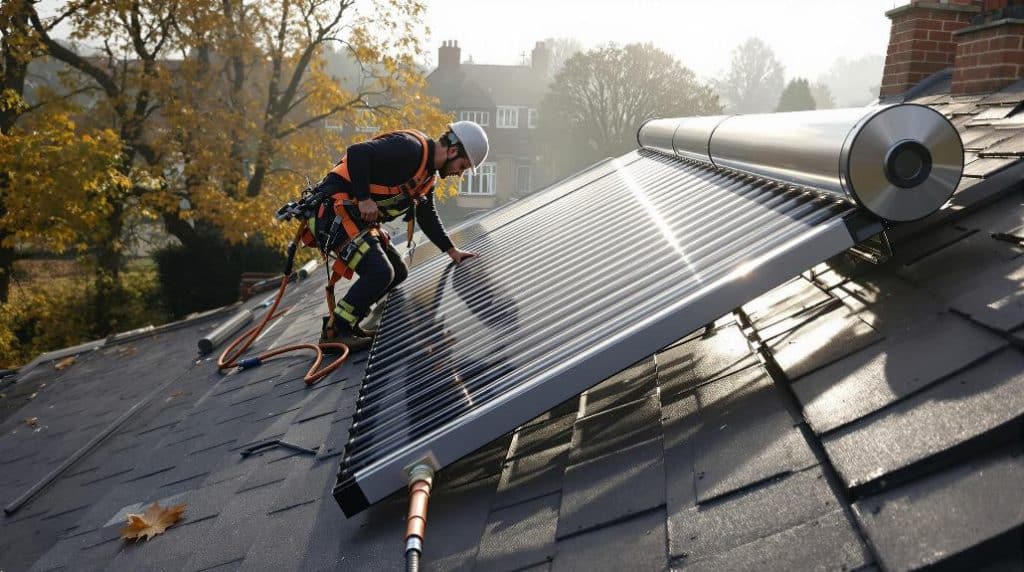
Installing solar water heaters can save you a bundle on energy bills and help the planet, too! First, check if your roof faces south and handles the weight of the solar collectors. Choose between active and passive systems based on your home's hot water needs. Once installed, these systems can provide 40%-60% of your hot water—and that's not too shabby! Remember to service your system every couple of years for the best results. Not only will you enjoy lower bills, but you'll also cut down on carbon emissions. Curious about costs and other neat tips? There's more to discover!
Key Takeaways
- Evaluate your roof's orientation and shading to ensure optimal sunlight exposure for solar collectors.
- Choose between active and passive systems based on your local climate and daily hot water needs.
- Verify local regulations and obtain necessary permits before installation; consider hiring certified installers.
- Regular maintenance every two years is essential for optimal performance and longevity of the system.
- Understand the cost range of installation and potential annual savings from reduced energy bills.
Understanding Solar Water Heating Systems
When considering a solar water heating system, it's essential to understand its key components and how they work together to provide hot water efficiently.
First up, you've got solar collectors, which absorb sunlight and turn it into heat. Pretty cool, right? This heat is then transferred to a heat transfer fluid—often glycol—before it heads to your storage tank, where it waits for you to enjoy that warm shower.
Now, if the sun decides to play hide-and-seek, you won't be left in the cold. That's where backup water heaters come into play, ensuring you've got hot water when the sun's taking a break. Plus, controls and valves help regulate everything, keeping the system running smoothly.
There are different types of systems: active ones use pumps, while passive systems rely on natural convection. If you live in a chilly area, an indirect system will be your best friend, preventing freezing issues.
A properly sized system can meet most of your hot water needs, even on cloudy days. So, whether you're a sun-worshipper or just love hot baths, understanding these components is the first step towards a cosy, eco-friendly home!
Preparation for Installation
Getting ready to install your solar water heater involves several important steps to guarantee everything goes smoothly.
First, assess your roof's suitability. Ideally, it should face south, with a tilt angle matching your geographical latitude. Keep an eye out for those pesky shadows from trees or nearby buildings—they can really diminish your system's efficiency.
Also, don't forget to check if your roof can handle the weight of the solar collectors. If it can't, ground-mounted systems might be your best bet.
Next, it's time to select the right system. Consider whether an active or passive setup fits your needs best. If you live in a warm climate, a direct system may work wonders, but colder areas might require an indirect system.
Calculate your daily hot water usage to make sure you choose the right size.
Finally, make certain you comply with local regulations. Check for necessary permits and hire a certified installer. They should have the Microgeneration Certification Scheme (MCS) stamp of approval.
Financially, keep an eye out for grants, tax credits, and quotes from multiple installers. It's all about making informed choices, so take your time!
Installation Process
The installation process for your solar water heater typically unfolds in several key steps that guarantee peak performance and efficiency. First, assess your household needs to determine the right system size. Then, evaluate your roof's orientation and shading to maximise sunlight exposure. Don't forget to check local regulations for necessary permits!
Next comes the fun part: setting up the solar collectors. You'll mount them securely on your roof and connect them to the circulation system. Here's a quick table to help you visualise the main steps:
| Step | Action | Purpose |
|---|---|---|
| Roof Mounting | Install mounting hardware | Secure attachment for collectors |
| Collector Positioning | Align collectors for sunlight exposure | Maximise energy absorption |
| System Startup | Fill system with water | Prepare for operation |
After that, you'll install the storage tank and integrate it with your plumbing system. Finally, check for leaks, register your system, and get ready to enjoy that hot water! You'll be basking in the benefits of solar energy before you know it. Just remember, a little patience goes a long way in ensuring everything works smoothly. Happy installing!
Maintenance and Suitability
To guarantee your solar water heater operates efficiently and suits your household needs, it's vital to take into account both maintenance and system suitability.
First off, the ideal orientation is significant; aim for your solar collectors to face between south-east and south-west at an angle of 20 to 50 degrees. This positioning helps maximise performance.
Next, consider your hot water demand. If you have a larger household, like a bustling family or house-share, solar water heating is a smart choice. You can mount the system on your rooftop or at ground level, but rooftops are often preferred to keep those pesky pipe runs short.
Now, let's talk maintenance. Regular servicing every two years keeps everything in tip-top shape, while annual checks are recommended for safety.
You'll want to monitor the heat transfer fluid's condition and inspect components regularly to prevent issues. Proper maintenance not only extends your system's life beyond 15-20 years but also guarantees it operates efficiently, saving you money in the long run.
Cost Analysis and Savings
Understanding the costs associated with solar water heaters is just as important as ensuring proper maintenance and suitability for your home.
You'll find that the average installation ranges from £3,000 to £5,000, with a reduced VAT rate of 5% in the UK. Costs can vary depending on factors like system size, roof type, and even where you live.
If you're feeling handy, DIY kits are available for £1,500 to £2,500, but remember, you may still need a pro to help you out.
The beauty of solar water heaters is that they can cover 40% to 60% of your hot water needs, which translates into annual savings of around £200 to £360, depending on what energy source you're replacing.
This means you can protect your wallet from rising energy bills while being eco-friendly.
Plus, the system typically lasts over 40 years!
So, when you do the maths and consider your savings-to-investment ratio, it's clear you're making a smart decision—one that can even cut carbon emissions by up to 400 kg a year.
Isn't that a win-win?
Conclusion
So, you've got the scoop on solar water heaters! With a little prep and the right installation, you're well on your way to enjoying hot showers while saving on energy bills. Plus, you'll be doing your part for the planet—talk about a win-win! Remember, regular maintenance keeps your system running smoothly, so don't skimp on that. Immerse yourself in this eco-friendly journey, and soon you'll be basking in sunshine-powered warmth. Happy heating!
Heating issues? I cover central heating repairs in Dartford and Gravesend callouts — and if sludge is the culprit, a power flushing will sort it.