
What Goes Into Your Annual Heating System Check?
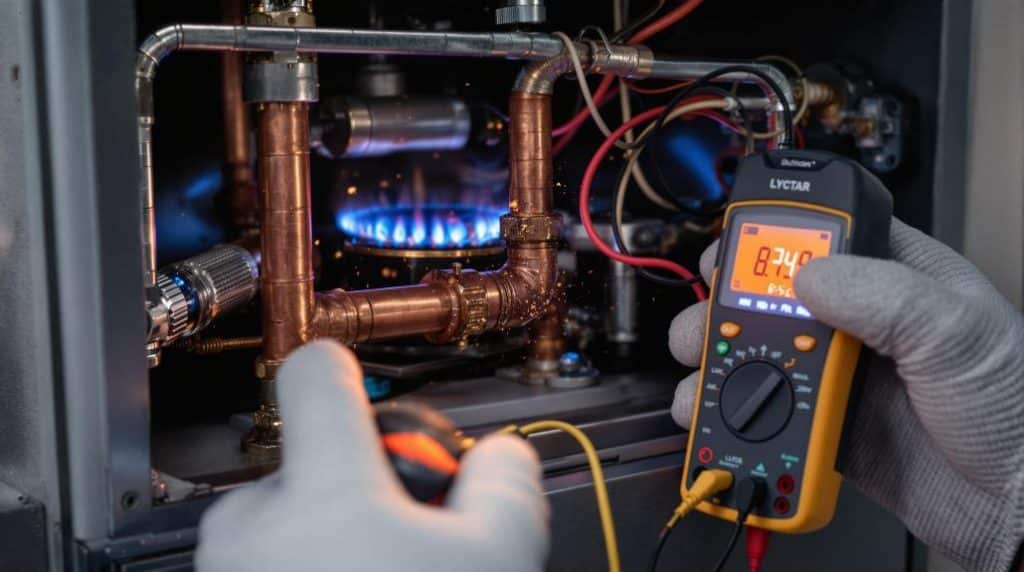
Your annual heating system check is essential for keeping your home safe and cosy. It includes checking electrical components, inspecting burners, and testing carbon monoxide detectors. Plus, you'll want to clean air filters and verify your thermostat is working correctly. Think of it as a check-up for your heater—without it, you could face unexpected bills or a chilly home in winter! Regular maintenance not only saves you money but also keeps you comfortable. So, if you're curious about specific tips to maximise your heating system's efficiency and lifespan, there's plenty more to discover!
Key Takeaways
- Inspect and clean burners for proper combustion and efficiency to enhance system performance.
- Test and verify the functionality of carbon monoxide detectors and GFCIs for safety compliance.
- Check heat exchanger for cracks and ensure thermostat accuracy for optimal temperature control.
- Monitor ducts for obstructions and seal any leaks to improve overall energy efficiency.
- Conduct regular maintenance and tune-ups to extend equipment lifespan and reduce utility costs.
Electrical and Safety Checks
When you're preparing your heating system for the winter, it's vital to conduct thorough electrical and safety checks to confirm everything operates safely and efficiently.
First off, take a good look at your outlets and switches. Make sure they're working properly—no funny smells, sparks, or smoke, please! All your outlets should be cool to the touch, and plugs should fit snugly. Trust me, you don't want an overheating situation.
Next, check your Ground Fault Circuit Interrupters (GFCIs) and Arc Fault Circuit Interrupters (AFCIs). Test them monthly to catch any potential hazards before they become a problem.
And, let's not forget about carbon monoxide detectors. They should be installed near your heating systems, and it's important to check if they're functioning correctly.
Finally, verify your chimney and vents are clear of blockages. You wouldn't want a cosy fire turning into a carbon monoxide risk, right?
Always ensure your heating system is serviced by a Gas Safe registered engineer to maintain compliance with safety regulations and protect your household.
Component Inspection and Maintenance
Preparing your heating system for winter means diving into component inspection and maintenance to guarantee everything runs smoothly.
First up, clean those burners! Dust and debris can prevent proper combustion, leading to inefficiency. Don't forget the chimney and vents—annual cleaning can prevent fire hazards and guarantee good airflow. If you use a humidifier, a quick scrub will keep it running well and hygienic.
Next, inspect key components. Check the heat exchanger for cracks, and make sure your carbon-monoxide detector is functional. These steps are essential for safety!
Inspect the chimneys, flues, and vent pipes to avoid inefficiencies. Also, take a look at the air filter; a clean filter improves system efficiency, so replace it if needed.
Finally, verify that your thermostat's working properly and that both indoor and outdoor units are functioning as they should.
Don't forget the condensate drain—clogs can lead to unsightly water damage. By tackling these tasks, you can enjoy a warm and cosy winter, knowing your heating system is in tip-top shape!
Plus, you'll impress your friends with your home maintenance prowess.
Gas Safe registered engineers are legally required to perform these safety checks in the UK to ensure your heating system operates safely.
System Performance and Efficiency
To guarantee your heating system operates at peak performance and efficiency, it is crucial to understand the various metrics that gauge its effectiveness. A great place to start is with the Annual Fuel Utilisation Efficiency (AFUE) rating. This tells you how efficiently your heating system converts fuel into heat, with high-efficiency systems ranging from 90% to 98.5%. The higher the AFUE, the lower your heating bills will be.
| Metric | Description | Efficiency Range |
|---|---|---|
| AFUE | Measures fuel efficiency of heating systems | 90% – 98.5% |
| HSPF | Seasonal heating efficiency for heat pumps | 8.2 – 13.5 |
| SEER | Cooling efficiency for heat pumps | Varies |
| COP | Compares heat pump efficiency to electric heat | Above 1.0 |
Monitoring your energy bills and usage patterns can also help spot inefficiencies early. Remember, older systems may need a boost to keep up. Regular maintenance, like checking ducts and using programmable thermostats, can make a big difference. After all, nobody wants to be left out in the cold! Gas Safe registered engineers perform thorough diagnostics to ensure your system maintains optimal efficiency throughout the year.
Exterior and Interior Furnace Care
Proper care for your furnace—both outside and inside—guarantees it runs smoothly and efficiently throughout the heating season.
Start by clearing space around your outdoor unit. You wouldn't want a bunch of weeds blocking airflow, right? Keeping a few feet clear helps your furnace breathe easier.
Also, don't forget about your chimney and vents; cleaning them annually prevents fire risks and guarantees safe ventilation.
Inside your home, focus on cleaning the burners and changing air filters regularly. A clean filter not only improves airflow but also keeps your indoor air fresh. Think of it as giving your furnace a spa day!
And while you're at it, check the thermostat to make sure it's working accurately—nobody wants to be bundled up in a snowstorm when the heat could be cranked up.
Finally, don't overlook those pesky mechanical details. Lubricate moving parts and tighten electrical connections. It's like giving your furnace a little tune-up, guaranteeing it's ready to keep you cosy.
Regular maintenance from Gas Safe registered professionals ensures your heating system meets all safety standards and operates efficiently.
With these simple steps, you'll keep your heating system happy and efficient all season long!
Heating System Functionality
A heating system's functionality hinges on several key components working together seamlessly.
At the heart of it all is the furnace, that big metal box tucked away in your basement or attic. It generates heat, either from electricity or gas, which then travels through the heat exchanger to warm up your home.
The blower kicks in next, pushing that cosy air through the ducts and into each room. You might think of the thermostat as your home's temperature boss; it tells the furnace when to get to work, making sure you're comfy even on the chilliest days.
Now, let's not forget about the ducts. They're like the highways for warm air, ensuring it reaches every corner of your space.
Regular checks on these components can save you a tonne on energy bills and keep your home safe from hazards like carbon monoxide leaks. So, a little maintenance goes a long way in keeping everything running smoothly.
In short, by keeping your heating system in top shape, you're not just ensuring comfort; you're also optimising performance and extending its lifespan. It's a win-win!
With major brands like Worcester Bosch systems commonly experiencing issues such as low pressure and random shutdowns, professional maintenance becomes even more crucial.
Additional Maintenance Tasks
Regular maintenance tasks are vital for keeping your heating system running efficiently and safely. You wouldn't want your furnace to throw a tantrum in the middle of winter, right?
So, let's plunge into some extra upkeep you should consider.
First off, lubricating motor bearings and other moving parts is critical. This helps guarantee everything runs smoothly, like your favourite playlist.
Next, checking and adjusting the fan belt tension is a must for peak performance. You wouldn't want a loose belt causing a ruckus!
Don't forget to test the ignition system—safety first! Plus, inspecting and cleaning the interior and exterior of your furnace can help it perform at its best.
And let's not overlook the all-important air filter; changing it regularly prevents damage and keeps your air clean.
Finally, scheduling a professional maintenance inspection annually isn't just a good idea, it's vital!
With these additional tasks, you're not just maintaining a heating system; you're making sure your home stays warm and cosy, making those chilly nights much more enjoyable.
After all, who doesn't love snuggling up with a good book in a warm home?
Modern smart thermostat systems can help monitor your heating system's performance and alert you when maintenance is needed.
Importance of Regular Maintenance
Maintaining your heating system isn't just about keeping it running; it greatly impacts your home's comfort and efficiency. Think of regular maintenance as a health check-up for your furnace. Just like you wouldn't skip your annual doctor's visit, your heating system needs that TLC, too!
By scheduling routine inspections, you're ensuring your system operates at peak efficiency, which means lower utility bills and a reduced environmental impact.
Imagine cosying up in a warm home without worrying about skyrocketing energy costs. Regular checks prevent wear and tear that can lead to unexpected breakdowns. Plus, they help extend the lifespan of your equipment, saving you from those hefty replacement costs down the line.
And let's not forget about safety! Regular maintenance can spot potential hazards, ensuring your home remains a safe haven. No one wants to deal with a surprise gas leak or a fire hazard when it's freezing outside.
With Thames Boilers expertise, your heating system can be maintained to manufacturer standards, offering guarantees of up to 12 years on new installations.
Tips for Energy Efficiency
When you prioritise energy efficiency in your heating system, you not only save money but also contribute to a healthier environment.
Start with yearly tune-ups; they can boost your system's efficiency and comfort, making your home feel cosy without breaking the bank.
Don't forget to change your filters every three months—it's like giving your HVAC a revitalising boost!
Using smart or programmable thermostats can also work wonders. You can save up to 10% on heating just by lowering the temperature by 7-10°F for eight hours a day.
Plus, who wouldn't want to come home to the perfect temperature after a long day?
Sealing and insulating ductwork is another game-changer. It can improve efficiency by up to 20%, which means more money in your pocket.
Clear any obstructions around your HVAC system to keep it functioning properly.
If your equipment's older than your last birthday cake, consider upgrading to ENERGY STAR models.
They're not only better for your energy bill but also for the planet.
Regular maintenance should include flue gas analysis and pressure checks to ensure your boiler operates at peak efficiency.
With these tips, you'll be well on your way to a warm, efficient home!
Conclusion
So, there you have it! Your annual heating system check is like a spa day for your furnace—keeping it happy and healthy. By checking electrical safety, inspecting components, and ensuring efficiency, you're not only boosting your comfort but also saving on energy bills. Remember, a little maintenance goes a long way. Treat your heating system right, and it'll reward you with warmth all winter long. Plus, who doesn't love a cosy home? Happy heating!
Heating issues? I cover central heating repairs in Dartford and Gravesend callouts — and if sludge is the culprit, a power flushing will sort it.