
5 Earth-Friendly Kitchen Habits That Cut Bills
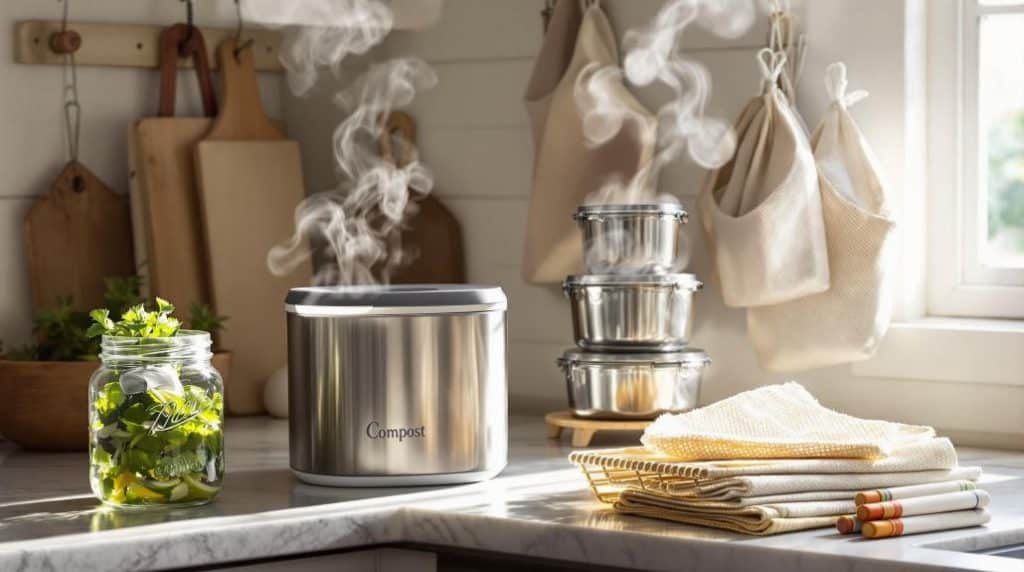
You can easily save cash and go green in your kitchen with five simple habits! Start by reducing food waste—plan meals and freeze leftovers to dodge spoilage. Next, optimise energy usage by using efficient appliances and cooking methods. Try steam cooking to save water while keeping nutrients intact. Speaking of water, consider installing low-flow faucets and reusing water creatively. Ultimately, swap those disposable paper towels for washable cloths and choose stainless steel containers instead of plastic. It's fun, eco-friendly, and it boosts your savings! Stick around, and you'll discover even more ways to make your kitchen a sustainable haven!
Key Takeaways
- Reduce food waste by understanding expiration labels and planning meals to use ingredients efficiently, saving money on groceries.
- Optimise energy usage by replacing old appliances with Energy Star-certified models and utilising microwaves for smaller meals to cut energy costs.
- Conserve water with low-flow kitchen taps and by defrosting food in the fridge instead of using running water, lowering utility bills.
- Use sustainable cooking methods like steam cooking and turning off heat early to save energy while preserving nutrients in your meals.
- Choose eco-friendly products such as reusable cloth towels and stainless steel containers, reducing waste and saving money in the long run.
Reduce Food Waste
Reducing food waste is essential for a more sustainable kitchen, and it starts with planning your shopping and meals effectively. First off, get familiar with expiration labels. "BEST IF USED BY" means the food's still good for quality, while "USE BY" is your safety net.
Next, make a shopping list based on your meal plan. This'll help you avoid those impulse buys that often lead to waste.
When you're planning meals, try to coordinate similar ingredients. This way, you can use everything up before it spoils. Setting your fridge temperature correctly can also extend your food's shelf life.
And don't forget about your freezer! Leftovers and surplus food can live on for months if you freeze them.
In the kitchen, get creative. Brush vegetables instead of peeling them, and save those scraps for broths. Have stale bread? Turn it into breadcrumbs or croutons!
Optimize Energy Usage
While you may not realise it, optimising energy usage in your kitchen can greatly impact both your utility bills and the environment.
Start by swapping out those old appliances for Energy Star-certified ones, which use less energy. If you're cooking, consider investing in an induction cooktop; it's the most efficient option and can speed up your cooking time.
For multiple dishes, convection ovens circulate air, so you save energy while cooking up a feast.
When it comes to smaller meals, don't overlook your microwave—it can cut cooking energy by up to 80%!
And if you're boiling water, use an electric kettle instead of the stove; it's faster and more efficient.
Remember to cover your pots and pans to speed up boiling and prevent heat loss by keeping that oven door closed.
Finally, turn off the heat a few minutes early; your stovetop will continue cooking with residual heat.
Regularly check your appliances, too. Cleaning filters and ensuring your fridge is set to the right temperature can work wonders.
You'll save energy, money, and feel good about helping the planet—who knew being eco-friendly could be this rewarding?
Use Sustainable Cooking Methods
By incorporating sustainable cooking methods into your routine, you can considerably lower your energy usage and make a positive impact on the environment.
For starters, try steam cooking; it uses less water and energy while locking in nutrients. If you turn off the heat a bit early, you'll save even more energy. Plus, chopping your ingredients into smaller pieces can cut cooking times markedly.
Don't forget about using lids! Covering your pots can reduce cooking time by up to 40%, which is a win-win for your wallet and the planet.
Also, make sure you're using the right pans—cast iron and copper pans conduct heat efficiently, allowing you to cook faster and save energy.
Every little change counts, so get creative with your cooking techniques. Embrace lower temperatures and efficient pan usage, and you'll notice the difference in your energy bills while also feeling good about your eco-friendly choices.
Making these small adjustments not only enhances your cooking but also helps nurture our planet. After all, who wouldn't want to whip up delicious meals while being kind to the Earth?
Conserve Water Efficiently
Water is a precious resource, and conserving it in your kitchen can make a significant difference. You mightn't think about it, but simple changes can save you money and help the planet.
Start by installing low-flow kitchen taps and adding aerators to reduce water flow. Upgrading to an Energy Star rated dishwasher means you'll use less water each time you wash your dishes—plus, it's often more efficient than washing by hand!
When you cook, plan ahead. Defrost frozen food in the fridge instead of under running water and rinse your fruits and veggies in a bowl. Ever tried boiling water in an electric kettle? It's quicker and uses less energy, which is a win-win.
For cleaning, scrape plates instead of rinsing them under running water. Wash dishes in a filled sink, and try using a broom instead of mopping to save even more.
And don't forget: if you catch running water while waiting for it to warm up, use it for watering plants. Small swaps add up, and soon you'll find that conserving water isn't just easy—it's pretty rewarding too!
Choose Eco-Friendly Products
Choosing eco-friendly products for your kitchen is a simple yet impactful way to reduce your environmental footprint.
Making the switch not only benefits the planet, but it can also save you money in the long run. Here's how you can get started:
1. Ditch the Disposables: Replace paper towels with reusable cloth towels.
You'll save cash and trees while adding a touch of charm to your kitchen.
2. Opt for Durable Materials****: Invest in cookware made from stainless steel or cast iron.
These materials last longer and perform better than flimsy non-stick options.
3. Support Sustainable Brands****: Seek out products from companies that prioritise eco-friendly practices.
Look for those with certifications like Energy Star to guarantee you're making a responsible choice.
Conclusion
By adopting these five earth-friendly kitchen habits, you're not just saving money, you're also making a positive impact on the planet. Imagine slashing your bills while being a kitchen superhero! Whether you're reducing food waste or choosing eco-friendly products, every little change counts. So, grab your reusable bags, turn off that oven when you're done, and let's cook up some savings together. Your wallet and Mother Earth will thank you for it!